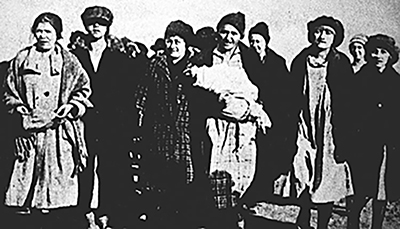
 In the autumn of 1893, the coal town of Pittsburg, Kansas did something extraordinary.
It outlawed women.
Not metaphorically. Not socially. Legally.
In September of that year, the city council passed an ordinance prohibiting women from entering a particular district of town — a neighborhood lined with saloons, gambling halls, and brothels known locally as the “North Side.”
Any woman found in the restricted area could be arrested and fined.
The logic, according to supporters, was simple:
The North Side was dangerous.
Women needed protection.
The result was chaos.
Within days, hundreds of women marched into the forbidden district in open defiance. They stormed saloons. They smashed windows. They chased prostitutes out of town.
And for a brief, combustible moment in 1893, Pittsburg, Kansas became the center of a gendered civic war.
This is the story of the town that banned women — and the women who refused to be banned.
Coal, Whiskey, and Tension
In the late 19th century, Pittsburg was a booming coal town in southeastern Kansas. Its mines drew thousands of immigrant workers — Italians, Slavs, Germans, Irish — men who labored long hours underground and spent wages in the businesses that sprang up around them.
Boomtown economics followed a familiar pattern:
-
Saloons multiplied.
-
Gambling dens thrived.
-
Brothels flourished.
The North Side district became notorious.
Liquor flowed freely.
Vice was open.
Fights were common.
For many in town — particularly church leaders and reform-minded women — the district symbolized moral decay.
The 1890s were already tense across America. The Panic of 1893 had triggered a national economic depression. Jobs were scarce. Families struggled.
In Pittsburg, anxiety simmered beneath the coal dust.
The Ordinance
In September 1893, city officials attempted what they believed was a pragmatic solution.
Instead of shutting down the vice district — which was economically entrenched and politically complicated — they passed an ordinance banning “respectable women” from entering it.
The official justification was protection.
The language framed women as vulnerable and morally pure — too delicate to wander among saloons and brothels.
It was paternalistic.
It was insulting.
And it was explosive.
A Ban Meant to Preserve Morality
Supporters of the ordinance argued that if wives and daughters stayed away from the North Side, the problem would remain contained.
Vice would exist — but in isolation.
The logic was spatial containment.
If women could not enter the district, it would reduce scandal and shield the “good” women of town from exposure.
It did not occur to lawmakers that women might resent being barred from public streets.
Women Organize
The response was swift.
Local women, many affiliated with temperance movements and church groups, were outraged.
The Women’s Christian Temperance Union (WCTU) was active in Kansas at the time, and prohibition sentiment was strong.
To these women, the ordinance was not protection.
It was surrender.
Rather than confront prostitution and alcohol, the city had chosen to restrict women’s freedom.
The implication was clear:
Men’s vice would continue uninterrupted.
Women would simply be removed from view.
They refused.
The March on the North Side
On September 25, 1893, hundreds of women gathered.
Accounts vary, but estimates suggest between 100 and 300 women marched together toward the forbidden district.
They did not come quietly.
They carried sticks.
They carried stones.
They carried righteous fury.
When they reached the North Side, they entered saloons and brothels, confronting proprietors and workers alike.
Windows shattered.
Furniture was destroyed.
Several prostitutes were forcibly escorted to trains and sent out of town.
It was vigilantism wrapped in moral crusade.
Chaos and Counterreaction
The riot shocked Pittsburg.
Some residents applauded the women’s courage.
Others were horrified at the violence.
Saloons temporarily closed.
Brothel operators fled.
City officials scrambled.
Law enforcement found itself in an awkward position:
Arresting women protesting vice would look terrible.
But ignoring property destruction undermined authority.
The ordinance that had sparked the uprising was quietly reconsidered.
The Ordinance Repealed
Within weeks, the ban on women entering the North Side was repealed.
The city recognized it could not enforce a law that half the population refused to obey — especially when that half was organized and willing to riot.
The attempt to “protect” women by excluding them had backfired spectacularly.
The women of Pittsburg had demonstrated that they were not passive wards of civic policy.
They were political actors.
The Broader Context: Temperance and Women’s Activism
The Pittsburg riot did not occur in isolation.
The late 19th century saw growing activism among American women.
Temperance movements gained momentum.
Suffrage campaigns expanded.
Women increasingly challenged political exclusion.
Kansas, in particular, was fertile ground for reform movements.
In 1881, Kansas had become the first state to adopt statewide prohibition.
The Pittsburg ordinance clashed directly with that reformist spirit.
To ban women instead of banning vice felt like betrayal.
Gender and Public Space
The incident highlights a critical shift in American social norms.
In the 19th century, public space was often coded male.
Saloons were male domains.
Politics was male territory.
Economic life was male-dominated.
The ordinance reinforced that boundary.
Women belonged in private space.
Men owned the streets.
The riot shattered that boundary.
Women marched into a male-controlled district and asserted presence.
It was about more than alcohol.
It was about visibility.
The Irony of “Protection”
Throughout history, restrictions on women have often been justified as protective.
The Pittsburg ordinance followed that pattern.
It claimed to shield women from danger.
But in doing so, it implied that women lacked agency.
The protesters rejected that premise.
If vice existed, they would confront it directly.
Not hide from it.
A Town Divided
In the aftermath, Pittsburg was fractured.
Some citizens praised the women for defending morality.
Others condemned them as disorderly.
Business interests worried about economic fallout.
The coal mines continued operating.
But the social equilibrium had shifted.
Women had demonstrated collective power.
A Forgotten Flashpoint
The Pittsburg riot of 1893 is not widely remembered today.
It did not produce national legislation.
It did not spark a revolution.
But it represents a microcosm of larger American tensions:
-
Gender roles under strain.
-
Public morality debates.
-
Economic instability.
-
The rising political voice of women.
It was a local eruption of a national transformation.
Final Reflections: The Streets Belong to Everyone
The town that banned women did not remain that way for long.
The ordinance collapsed under the weight of resistance.
The North Side vice district eventually faded with broader social changes.
But the lesson endures.
Attempts to control public morality by restricting women’s presence have rarely ended quietly.
In 1893, in a dusty Kansas coal town, hundreds of women crossed an invisible line and refused to be legislated out of existence.
They marched.
They shattered glass.
They forced repeal.
And in doing so, they turned a paternalistic law into a footnote — and themselves into the story.
The town tried to ban women.
Instead, it discovered what happens when women decide to claim the streets.