 In 1925, in a suite at the luxurious Hôtel de Crillon in Paris, a group of well-dressed scrap metal dealers gathered for a confidential meeting.
They had been summoned by a high-ranking government official.
France, they were told, faced a problem.
The Eiffel Tower — that towering iron monument of the 1889 World’s Fair — was deteriorating. Maintenance costs were enormous. Public opinion was divided. And the government, discreetly, had decided to dismantle it.
The men were not there as tourists.
They were there to bid on the scrap metal.
The official hosting the meeting was polished, authoritative, and impeccably dressed. He carried government stationery. He spoke in hushed tones of national embarrassment and bureaucratic delicacy.
His name was Count Victor Lustig.
He was not a count.
He was not a government official.
And he did not work for France.
Within weeks, he would “sell” the Eiffel Tower — not once, but twice.
This is the story of one of the greatest cons in history.
The Man Behind the Scheme
Victor Lustig was born in 1890 in what is now the Czech Republic. Charming, multilingual, and gifted with theatrical confidence, he possessed the essential trait of a great con artist:
He understood what people wanted to believe.
Before Paris, Lustig had already made a name for himself swindling wealthy Americans. One of his most famous scams involved a so-called “money box” — a device he claimed could duplicate currency. It would produce one authentic bill, followed by hours of nothing before victims realized they’d been duped.
But the Eiffel Tower scheme would elevate him into legend.
Paris in the 1920s
To understand how the con worked, you must understand Paris in 1925.
The city was glittering.
The Jazz Age had arrived.
American expatriates filled cafés.
Art deco flourished.
But beneath the glamour were anxieties.
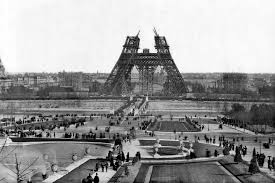
The Eiffel Tower, built in 1889 as a temporary exhibition structure, had faced criticism from its inception. Many Parisians had despised it as an eyesore. By the 1920s, it required costly repairs.
Newspapers openly debated its maintenance expense.
Lustig saw an opportunity.
If people were already discussing dismantling the tower, the idea could be nudged into plausibility.
The Setup
Lustig forged official government documents on high-quality stationery.
He posed as a deputy director of the Ministry of Posts and Telegraphs — a department that, plausibly, oversaw the tower.
He invited five prominent scrap metal dealers to the Hôtel de Crillon for a confidential meeting.
The hotel itself added credibility.
This was not a back-alley deal.
It was high society.
Lustig explained that the government had quietly decided to dismantle the Eiffel Tower due to its upkeep costs. The sale would be handled discreetly to avoid public backlash.
He framed the bidders as insiders.
Privileged.
Chosen.
Targeting the Mark
Among the scrap dealers was a man named André Poisson.
Poisson was relatively new to the Parisian scrap trade. He longed for status among established businessmen.
Lustig sensed insecurity.
Con artists do not prey on stupidity.
They prey on desire.
Poisson wanted legitimacy. He wanted a breakthrough contract that would cement his place in Paris’s industrial elite.
The Eiffel Tower was that opportunity.
The Bribe
Lustig added one more layer to the scheme.
He hinted that, as a government official, he was underpaid.
Perhaps a discreet “personal incentive” might smooth the transaction.
This was masterful.
By inviting a bribe, Lustig transformed Poisson from victim to accomplice. If the deal proved fraudulent, Poisson would hesitate to report it — admitting to bribery would expose him.
Poisson paid both the purchase price and the bribe.
The tower had been sold.
On paper, at least.
The Escape
With payment secured, Lustig and his associate fled Paris.
Poisson soon realized the truth.
The Eiffel Tower remained firmly attached to the ground.
But embarrassment sealed his lips.
Admitting the con would mean confessing to attempted bribery and professional humiliation.
He stayed silent.
Lustig, emboldened by success, returned to Paris months later.
Selling It Again
A lesser con artist would have retired.
Lustig tried again.
He contacted a new group of scrap dealers with the same pitch.
This time, however, suspicion arose more quickly.
The second victim reported the scheme.
Lustig fled to the United States.
He had sold the Eiffel Tower twice.
The Psychology of Belief
How did intelligent businessmen fall for such an outrageous claim?
Because it wasn’t outrageous.
The tower had been controversial for decades.
It required expensive maintenance.
The government was known for bureaucracy.
The scenario was plausible enough.
Lustig understood that the best lies are anchored in truth.
The Aftermath
Lustig’s career did not end with Paris.
In America, he continued elaborate scams.
Eventually, he crossed paths with federal authorities for counterfeiting operations.
In 1935, he was arrested.
He died in Alcatraz prison in 1947.
On his death certificate, his occupation was listed as “apprentice salesman.”
It was an understatement.
The Tower Endures
Meanwhile, the Eiffel Tower remained standing.
By the 1930s, it had become indispensable as a radio transmission tower.
Public affection grew.
Today, it is perhaps the most recognized structure in the world.
The irony is exquisite.
A monument once criticized as useless became iconic — and once deemed expendable, was nearly sold for scrap.
Twice.
The Perfect Con
The Eiffel Tower scam works as a case study in con artistry because it contains every essential ingredient:
-
Authentic-looking documents
-
A prestigious setting
-
Plausible urgency
-
Psychological leverage
-
Exploitation of pride
Lustig did not rely on brute deception.
He constructed a scenario his victims wanted to be true.
They wanted exclusivity.
They wanted profit.
They wanted status.
He gave them all three — temporarily.
A Symbol of Modern Fraud
The story endures because it captures something timeless about fraud.
Grand monuments do not protect against deception.
Sophistication does not guarantee skepticism.
And confidence, when wielded properly, can bend reality.
The Eiffel Tower is 1,083 feet tall.
But Lustig’s audacity reached higher.
Final Reflections: When Iron Was Almost Air
In 1925, for a brief moment, the Eiffel Tower existed on paper as scrap metal.
It belonged — legally, in forged ink — to a man who thought he had secured the deal of a lifetime.
Instead, he secured a story that would echo for a century.
The tower still stands.
Victor Lustig does not.
But his con reminds us of an enduring truth:
The greatest monuments are not always made of iron.
Sometimes they are built from confidence, timing, and the irresistible human urge to believe we are in on something secret.
In a Paris hotel suite, a man sold the sky.
Twice.
And history, with a grin, kept the receipt.