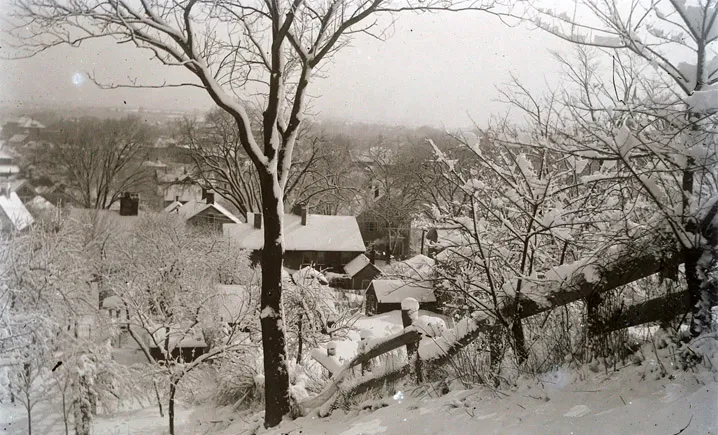
 In 1816, summer never came.
Snow fell in June. Frosts killed crops in July. August brought bitter winds instead of warmth. Across Europe and North America, people woke to skies dimmed by a strange, persistent haze. The sun rose weak and colorless. Harvests failed. Hunger spread. Riots erupted. Millions wondered if the world itself was breaking.
This wasn’t superstition or exaggeration. It was a global climate disaster caused by the largest volcanic eruption in recorded human history. Its effects reshaped weather, agriculture, art, literature, and migration patterns—and helped give birth to Frankenstein.
This was The Year Without a Summer.
A World Already on Edge
The timing couldn’t have been worse.
Europe was reeling from the Napoleonic Wars, which had ended just one year earlier. Armies had disbanded, economies were shattered, and food supplies were already strained. In North America, young nations depended heavily on subsistence farming.
Then the climate turned against them.
What followed felt biblical.
The Eruption That Changed the Planet
The cause of the catastrophe was the eruption of Mount Tambora, located on the Indonesian island of Sumbawa.
On April 10, 1815, Tambora exploded with unimaginable force.
-
It was a VEI-7 eruption, one of the largest in human history
-
The explosion was heard 1,600 miles away
-
An estimated 100,000 people died directly or indirectly
-
The mountain lost over 4,000 feet of height
But the true damage wasn’t local.
Tambora blasted massive amounts of ash and sulfur dioxide into the stratosphere, where it spread around the globe, reflecting sunlight back into space.
The Earth cooled.
A Dimmed Sun
By early 1816, the effects were unmistakable.
Observers described:
-
A sun that appeared bluish or purple
-
Persistent atmospheric haze
-
Unusual red and orange sunsets
Average global temperatures dropped by 1–2°C, which doesn’t sound dramatic—until you realize that even small shifts in global temperature can devastate agriculture.
Weather patterns collapsed.
Summer in Name Only
North America Freezes
In the northeastern United States and eastern Canada, the weather was apocalyptic.
-
June 1816: Snow fell in New England
-
July: Frosts destroyed corn and wheat
-
August: Ice formed on lakes
Farmers planted crops three times—only to watch them die each time.
Livestock starved. Hay prices skyrocketed. Families slaughtered animals they couldn’t feed.
Many simply gave up.
Europe Starves
Europe fared no better.
-
Cold rains destroyed wheat and barley
-
Bread prices doubled or tripled
-
Food riots broke out in France, England, and Switzerland
In Ireland, the potato crop failed, triggering famine conditions.
In Germany, people foraged for grass, bark, and moss. Reports emerged of bread mixed with sawdust just to stretch supplies.
The poor suffered first.
Then everyone else followed.
Hunger, Disease, and Death
Malnutrition weakened immune systems. Disease followed.
-
Typhus outbreaks spread rapidly
-
Cholera found fertile ground
-
Infant mortality surged
In some regions, famine claimed more lives than war ever had.
Governments struggled to respond. Relief efforts were uneven. Many leaders simply didn’t understand what was happening.
They blamed:
-
Sunspots
-
Divine punishment
-
Moral decay
No one suspected a volcano halfway across the world.
Panic and Prophecy
People looked for meaning.
Preachers warned of the apocalypse.
Farmers spoke of curses.
Pamphlets predicted the end of civilization.
In Switzerland, starving villagers attacked granaries. In England, bread riots became common.
The climate had turned social order inside out.
Migration: The Weather Changes America
In North America, the disaster triggered a quiet but massive migration.
Thousands of New England farmers packed up and moved west to:
-
Ohio
-
Indiana
-
Illinois
They were chasing land—and reliable weather.
This movement accelerated the settlement of the American Midwest and reshaped the nation’s demographic future.
A bad summer changed the map.
Frankenstein Is Born
One of the strangest legacies of 1816 is literary.
That summer, Mary Shelley, Percy Bysshe Shelley, Lord Byron, and John Polidori gathered at Lake Geneva.
Rain fell constantly.
The skies were dark.
The mood was claustrophobic.
Trapped indoors, Byron proposed a ghost story contest.
Mary Shelley imagined a scientist who creates life—and is horrified by the result.
She called it Frankenstein.
The novel’s bleak atmosphere, obsession with creation and consequence, and pervasive dread were shaped by the weather outside.
Climate birthed horror.
Art Painted in Ash
Artists noticed the skies.
Painter J.M.W. Turner captured brilliant, fiery sunsets throughout the 1810s. Scientists later linked these colors to volcanic aerosols in the atmosphere.
The sky itself had changed—and art recorded it.
Why the Cold Lasted So Long
Tambora wasn’t alone.
The early 1800s were already part of the Little Ice Age, a centuries-long period of cooler global temperatures.
Tambora didn’t start the cold—it intensified it.
The eruption disrupted:
-
Monsoon patterns
-
Jet streams
-
Ocean circulation
Recovery took years.
When Science Didn’t Exist Yet
Meteorology was in its infancy. Climate science didn’t exist.
People recorded weather obsessively—but had no framework to connect global events.
The idea that a volcano in Indonesia could freeze Vermont was unimaginable.
Understanding would come later.
Much later.
Lessons Learned in Hunger
The Year Without a Summer forced governments to confront food security.
It led to:
-
Early disaster relief policies
-
Agricultural experimentation
-
Interest in crop diversification
In Europe, it fueled social unrest that contributed to later revolutions.
Climate doesn’t just change weather.
It changes politics.
Modern Parallels
Today, the Year Without a Summer feels uncomfortably relevant.
We now understand:
-
How fragile global food systems are
-
How climate shocks ripple across economies
-
How quickly social order can fracture
Tambora reminds us that climate catastrophe doesn’t need warning.
It just needs a trigger.
The Earth Does Not Care About Calendars
1816 didn’t know it was summer.
The seasons failed.
The sky dimmed.
People starved.
And yet, humanity endured.
Communities adapted.
Science advanced.
Art emerged from darkness.
But the memory remains.
Final Thoughts: When the Sun Went Quiet
The Year Without a Summer is a reminder that civilization exists at the mercy of forces beyond control.
A single eruption.
A few degrees of cooling.
A world thrown off balance.
History often remembers wars and kings.
But sometimes, the most powerful force is the sky itself.
And sometimes, summer simply doesn’t come.