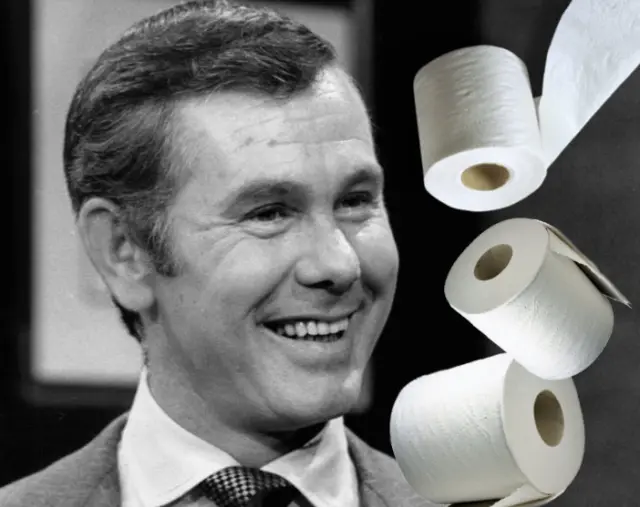
 In December 1973, something extraordinary happened in the United States.
There was no war.
No hurricane.
No factory collapse.
No pandemic.
And yet, Americans panicked.
They rushed to grocery stores.
They filled shopping carts.
They stripped shelves bare.
The object of national anxiety?
Toilet paper.
For weeks, Americans were convinced the country was running out of bathroom tissue. Supermarkets posted “Limit 2 Per Customer” signs. Fights broke out. Warehouses emptied. The shortage became real — but only because people believed it was.
The Great Toilet Paper Scare of 1973 was one of the purest examples of self-fulfilling panic in modern history — a moment when a joke, a misunderstanding, and a fragile national mood combined to create a crisis out of thin air.
And it all began with a comedian.
America in 1973: A Nation Already On Edge
To understand why toilet paper could trigger national anxiety, you have to understand the year.
1973 was not calm.
The United States was dealing with:
-
The ongoing fallout of the Vietnam War
-
The unfolding Watergate scandal
-
Rising inflation
-
The Arab oil embargo, which triggered fuel shortages and long gas lines
Americans were already lining up for gasoline. They were already worried about inflation. Trust in government was collapsing.
The mood was brittle.
So when a rumor surfaced that something essential might disappear — even something mundane — people were primed to react.
The Spark: Johnny Carson’s Joke
On December 19, 1973, Johnny Carson, host of The Tonight Show, delivered what he believed was a throwaway joke during his monologue.
He referenced a minor news item about a potential shortage of toilet paper in some government supply contracts and quipped that there was a nationwide shortage brewing.
The joke was delivered in Carson’s signature deadpan style.
The audience laughed.
And then something strange happened.
Millions of Americans who didn’t hear the full context — or who missed the punchline entirely — took it seriously.
From Punchline to Panic
Within days, stores across the country reported unusual buying behavior.
Customers began purchasing toilet paper in bulk.
Then more customers did the same.
Then everyone did.
Store managers saw shelves emptying faster than ever before.
There was no actual shortage — not yet.
But once demand spiked dramatically, supply chains couldn’t keep up.
The fear created the scarcity.
A Self-Fulfilling Prophecy
Toilet paper production in the United States in 1973 was steady and sufficient for normal consumption.
The problem was that panic buying is not normal consumption.
When thousands — then millions — of people suddenly buy several months’ worth of supply at once, distribution systems falter.
Factories couldn’t instantly increase output.
Trucks couldn’t replenish shelves fast enough.
Warehouses ran dry.
Suddenly, the rumor was true.
There was a shortage.
The Power of Suggestion
Why did Americans respond so dramatically to a joke?
Because toilet paper occupies a strange psychological space.
It is:
-
Essential
-
Non-negotiable
-
Embarrassing to be without
You can substitute foods.
You can delay purchases.
But running out of toilet paper feels like losing a basic layer of civilization.
And in 1973, civilization already felt fragile.
Oil Crisis Paranoia
The toilet paper scare occurred during the broader 1973 oil crisis.
Gas lines stretched for blocks.
Energy rationing loomed.
Prices were rising everywhere.
Americans were learning that scarcity could be real.
When Carson joked about toilet paper running out, it didn’t sound impossible.
It sounded like the next domino.
Retail Chaos
Reports from the time describe scenes that feel oddly familiar in hindsight.
Customers argued over the last packages.
Store managers posted limit signs.
Delivery trucks were mobbed.
Manufacturers scrambled to reassure the public.
There was no national production collapse.
No raw material shortage.
No union strike.
Only demand outpacing supply.
Carson Responds
When Carson realized his joke had contributed to nationwide panic, he attempted to correct it on air.
He clarified that there was no actual shortage.
He urged viewers not to hoard.
It didn’t immediately help.
By then, the story had escaped his control.
The rumor had momentum.
Media Amplification
News outlets began reporting on the shortages.
Ironically, coverage of empty shelves only intensified fear.
Viewers saw footage of people hoarding.
So they hoarded too.
The feedback loop was complete:
Rumor → Panic buying → Shortage → News coverage → More panic.
Why Toilet Paper?
It’s worth asking why this product — among thousands — became the focus.
Toilet paper is uniquely vulnerable to hoarding because:
-
It is bulky (so empty shelves are obvious)
-
It’s inexpensive (so buying in bulk feels manageable)
-
It has no expiration date
-
Running out feels catastrophic
In short, it’s the perfect panic commodity.
The Economics of Fear
The 1973 scare revealed something powerful about markets:
Supply chains are designed for predictability.
They work efficiently when consumption is steady and expected.
But they break down under sudden, irrational spikes in demand.
The toilet paper industry wasn’t underproducing.
Americans were overbuying.
The Social Psychology of Scarcity
Scarcity triggers instinct.
When people see empty shelves, they don’t assume:
“Everything is fine.”
They assume:
“Someone else knows something I don’t.”
That fear drives action.
The toilet paper scare became a case study in herd behavior.
How Long Did It Last?
The panic stretched into early 1974.
Gradually, production caught up.
Hoarders stopped buying.
Shelves refilled.
The crisis ended not because of intervention, but because demand normalized.
Once everyone had closets full of toilet paper, they stopped purchasing.
The cycle corrected itself.
A Harmless Panic?
Unlike many crises, the toilet paper scare caused no deaths.
But it revealed vulnerabilities.
It showed how quickly rumor can disrupt markets.
How humor can misfire.
How fragile public confidence can be.
And it foreshadowed future episodes.
Echoes in Modern Times
Nearly 50 years later, in 2020, toilet paper panic returned during the early days of the COVID-19 pandemic.
Once again:
-
Shelves emptied.
-
Limits were imposed.
-
Production struggled to keep up.
The parallels were striking.
Different cause.
Same psychology.
1973 had already proven the formula.
Lessons from the Roll
The Great Toilet Paper Scare of 1973 offers surprising insight.
It teaches that:
-
Panic spreads faster than facts.
-
Supply chains depend on trust.
-
Humor can unintentionally trigger real-world consequences.
It also reminds us that fear often focuses on the familiar.
People rarely panic-buy abstract concepts.
They panic-buy what they use daily.
The Comedian Who Accidentally Broke Retail
Johnny Carson never intended to spark a shortage.
He delivered a joke.
But in a tense national atmosphere, even humor can carry unintended weight.
The episode became part of American pop culture — retold as both comedy and cautionary tale.
Final Thoughts: The Fragility of Normal
The Great Toilet Paper Scare of 1973 wasn’t about paper.
It was about trust.
Trust that shelves will be stocked.
Trust that systems will function.
Trust that tomorrow will resemble today.
When that trust falters, even briefly, behavior changes.
And sometimes, all it takes is a single joke to reveal how thin the line between stability and panic truly is.
In 1973, America didn’t run out of toilet paper.
It ran out of certainty.
And for a few strange weeks, that was enough.