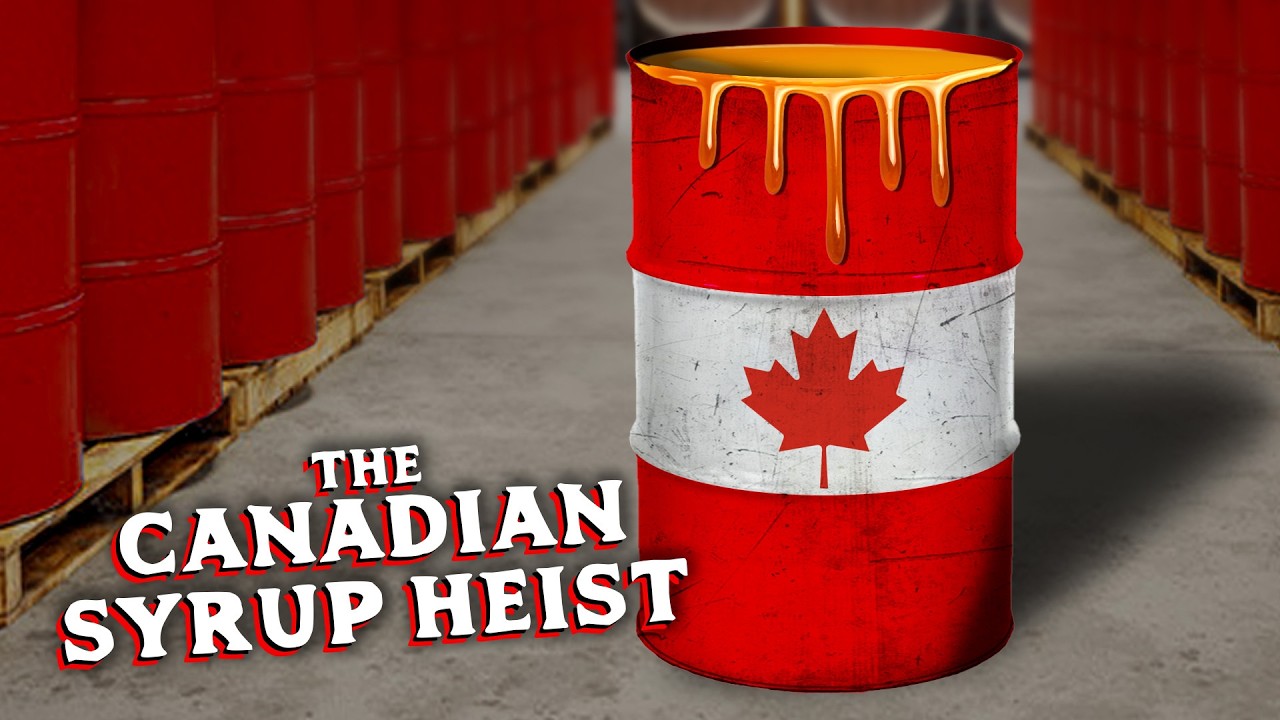
 In the summer of 2012, in a quiet warehouse in rural Quebec, thieves pulled off one of the strangest and most lucrative heists in North American history.
They didn’t steal cash.
They didn’t steal jewels.
They didn’t steal artwork.
They stole maple syrup.
Nearly 10,000 barrels of it.
By the time the scheme was uncovered, thieves had siphoned off approximately $18 million worth of syrup from what was, effectively, Canada’s strategic maple syrup reserve.
It was sticky.
It was patient.
It was absurd.
And it was brilliant.
This is the story of The Great Canadian Maple Syrup Heist — a crime that revealed just how serious Canada is about its sweetest export.
Canada’s Sweetest Commodity
To outsiders, maple syrup is quaint.
It’s pancakes and snow and polite branding.
But in Canada — and especially in Quebec — maple syrup is big business.
Quebec produces roughly 70–75% of the world’s maple syrup supply. The industry is so significant that it is regulated by a powerful organization: the Federation of Quebec Maple Syrup Producers (FPAQ) (now known as the Producteurs et productrices acéricoles du Québec).
The Federation manages production quotas, pricing, and — most intriguingly — a Global Strategic Maple Syrup Reserve.
Yes.
A syrup reserve.
The Maple Syrup Cartel
The Federation operates much like an agricultural cartel.
It sets quotas for how much syrup producers can sell.
It stabilizes prices.
It stores surplus syrup in reserve warehouses to prevent market crashes during bumper harvest years.
This system keeps prices steady and protects producers from volatility.
The reserve is not symbolic.
It contains tens of thousands of barrels of syrup — each holding approximately 45 gallons.
The total value can reach hundreds of millions of dollars.
In 2012, one of those warehouses sat in Saint-Louis-de-Blandford, Quebec.
And that’s where the heist began.
The Discovery
In July 2012, auditors from the Federation conducted a routine inventory check at the Saint-Louis warehouse.
They climbed onto a stack of barrels to inspect one.
Something felt wrong.
The barrel was light.
They opened it.
Instead of syrup, it contained water.
Further inspection revealed that thousands of barrels were empty or diluted.
Over months — perhaps longer — someone had been siphoning syrup from the reserve and replacing it with water.
The theft was massive.
And it had gone unnoticed.
How Do You Steal 3,000 Tons of Syrup?
The scale is staggering.
The thieves stole approximately 3,000 metric tons of maple syrup — nearly 10,000 barrels.
This was not a smash-and-grab.
It was methodical.
Investigators later learned that insiders were involved.
One of the key figures was a Quebec syrup dealer named Richard Vallières, who had legitimate access to the warehouse.
Vallières and accomplices allegedly:
-
Removed full barrels.
-
Replaced them with empty barrels or water-filled ones.
-
Sold the stolen syrup on the black market.
They used trucks.
They used falsified paperwork.
They used time.
It unfolded gradually, beneath the noses of inspectors.
Liquid Gold
Why steal syrup?
Because maple syrup is extraordinarily valuable.
In 2012, a barrel could fetch over $1,800.
Unlike perishable goods, syrup has a long shelf life.
It is stable.
It is transportable.
It is traceable only with difficulty once outside the official system.
On the black market, syrup could be sold to distributors bypassing Federation quotas.
It was liquid gold.
And in this case, it flowed quietly out of a warehouse.
The Investigation
When the Federation realized the scope of the theft, authorities launched a criminal investigation.
The Sûreté du Québec (provincial police) treated it seriously.
This was not petty theft.
It was one of the largest agricultural frauds in Canadian history.
Barrel serial numbers were tracked.
Warehouse access logs examined.
Transport routes scrutinized.
In the following months, police recovered some of the stolen syrup from distributors and exporters.
But much of it had already been sold and consumed.
Pancakes were flipped.
Waffles were drizzled.
And no one knew they were eating contraband syrup.
Arrests and Trials
In December 2012, police arrested several suspects.
Over time, more individuals were charged.
The legal proceedings stretched for years.
In 2017, Richard Vallières was found guilty of theft, fraud, and trafficking stolen goods.
He was sentenced to eight years in prison and ordered to pay millions in restitution.
Other accomplices received fines and shorter sentences.
The heist had consequences.
But its audacity cemented its place in Canadian lore.
The Reserve Reforms
The Federation did not take the embarrassment lightly.
Security measures were strengthened.
Warehouses were upgraded.
Tracking systems improved.
Barrels monitored more carefully.
The Maple Syrup Reserve remains operational — but tighter.
The heist exposed vulnerabilities in a system built on trust and controlled access.
A Crime of Opportunity
The Maple Syrup Heist succeeded for months because it exploited insider access and complacency.
Warehouses stored thousands of identical barrels stacked high.
Routine inspections were not exhaustive.
Weight discrepancies went unnoticed.
The thieves counted on that.
And they were right.
Until they weren’t.
The Symbolism of Syrup
The heist resonated because of its cultural symbolism.
Maple syrup is a national icon.
The maple leaf adorns the Canadian flag.
Syrup is tied to identity and heritage.
To steal syrup at this scale felt almost mythic — like stealing snow from the Arctic.
It was both hilarious and shocking.
Global Headlines
When news broke internationally, headlines ranged from amused to incredulous.
“The Great Canadian Maple Syrup Heist.”
“Sticky Fingers Strike in Quebec.”
“Canada’s Sweetest Crime.”
The story’s tone oscillated between comedy and seriousness.
But to Quebec producers, it was no joke.
The financial damage was real.
Organized Crime and Agriculture
The heist also highlighted how agricultural commodities can attract organized crime.
Maple syrup is high-value, relatively easy to transport, and tightly regulated.
Black markets thrive where regulation meets demand.
The Federation’s quota system, while stabilizing, created incentive for off-the-books sales.
The heist exploited that gray zone.
The Recovery
Not all the syrup was lost.
Police recovered millions of dollars’ worth from storage facilities and distributors.
Some barrels were returned to the reserve.
Others were too diluted or compromised.
By 2013, much of the crisis had been contained.
But the legend endured.
Final Reflections: The Sweetest Crime
The Great Canadian Maple Syrup Heist is unforgettable because it blends absurdity with sophistication.
It wasn’t flashy.
It wasn’t violent.
It wasn’t cinematic in the usual sense.
It was quiet.
Barrel by barrel, thieves drained a national reserve.
They replaced syrup with water.
They sold sweetness for profit.
They almost got away with it.
In a warehouse in rural Quebec, liquid gold disappeared into the night.
And Canada learned that even something as wholesome as maple syrup can become the centerpiece of a world-class heist.
The barrels are now guarded more carefully.
The reserve remains stocked.
And somewhere, perhaps, a former thief still tastes maple syrup and remembers the summer when he nearly sweetened himself into history.