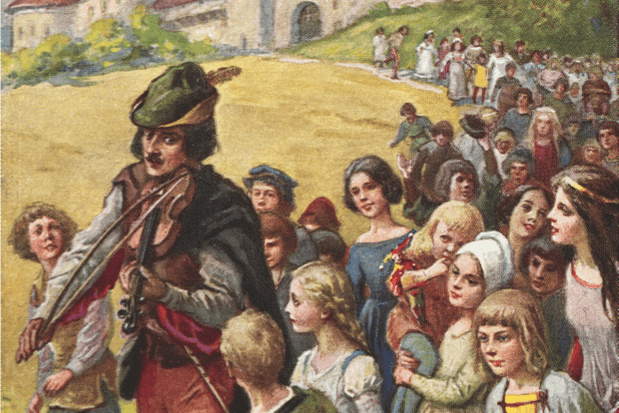
 In the summer of 1212, something astonishing began to move across Europe.
They were not knights.
They were not trained soldiers.
They carried no armor, no siege engines, no horses.
They were children. Or at least, that’s how the story has been told for more than eight centuries.
They marched through France and Germany barefoot and hungry, singing hymns and proclaiming that God had chosen them to reclaim Jerusalem. They believed the Mediterranean Sea would part for them, just as the Red Sea had parted for Moses. They believed divine innocence would succeed where armored crusaders had failed.
Instead, they encountered hunger, betrayal, slavery, and disappearance.
This was the Children’s Crusade of 1212, one of the strangest and most tragic episodes of the medieval Crusading era — a story where faith, desperation, myth, and manipulation collided.
Europe in 1212: A World Obsessed with Jerusalem
By 1212, the Crusades had already been raging for over a century.
In 1095, Pope Urban II had called Christians to liberate Jerusalem from Muslim rule. Waves of armies followed. Some succeeded temporarily. Others failed spectacularly. The Fourth Crusade had disastrously sacked Constantinople — a Christian city — instead of reaching the Holy Land.
Jerusalem remained under Muslim control.
Europe was weary but not resigned. Crusading had become not just military policy, but spiritual culture. Sermons emphasized pilgrimage, sacrifice, and holy war. Salvation was framed as something earned through devotion and struggle.
In that environment, it is perhaps less surprising that children — or young people — believed they could succeed where knights had not.
The French Visionary: Stephen of Cloyes
The movement seems to have begun in France.
A shepherd boy named Stephen of Cloyes, around the age of 12 (according to later chroniclers), claimed to have had a vision. Christ had appeared to him disguised as a pilgrim and given him a letter for the King of France.
Stephen began preaching that children, pure of heart and uncorrupted by sin, would reclaim Jerusalem not through violence, but through faith.
His message resonated.
Children gathered.
So did adolescents.
So did peasants and the poor.
Within weeks, thousands were following him.
The German Movement: Nicholas of Cologne
At roughly the same time, in Germany, another young preacher emerged: Nicholas of Cologne.
Nicholas preached a similar message — that divine innocence would accomplish what armies could not.
He gathered followers from the Rhineland.
They marched south, across the Alps, toward Italy.
Many died crossing the mountains.
The survivors reached Genoa, expecting the sea to part before them.
It did not.
Who Were These “Children”?
Here the story grows complicated.
For centuries, the Children’s Crusade was told literally — as thousands of small children wandering toward the Mediterranean.
Modern historians, however, suggest the term “children” (from the Latin pueri) may have referred more broadly to poor youths, adolescents, landless peasants, or wandering laborers.
They were not all toddlers.
They were likely a mix of:
-
Teenagers
-
Young adults
-
Rural poor
-
Displaced peasants
Still, many were indeed very young.
And they were unarmed.
The March to the Sea
Stephen’s French group marched to Marseille.
Nicholas’s German group marched to Genoa and possibly Pisa.
Both groups believed that once they reached the coast, God would intervene.
According to legend, Stephen told his followers:
“The sea will open for us.”
When they arrived, it did not.
The Mediterranean remained indifferent.
Betrayal at the Harbor
In the French account, two merchants allegedly offered to transport Stephen’s followers to the Holy Land free of charge.
Seven ships were provided.
Two reportedly sank in storms.
Five sailed — not to Jerusalem, but to North Africa.
There, many of the young crusaders were allegedly sold into slavery.
The story appears in later medieval chronicles and may have been embellished, but there is evidence that some participants were indeed enslaved or died at sea.
If true, it transforms the Children’s Crusade from tragic naivety into calculated exploitation.
The Pope’s Reaction
When survivors returned home — defeated and disillusioned — they reportedly sought audience with Pope Innocent III.
The pope did not endorse their mission.
He did not call it legitimate.
But he is said to have praised their faith while condemning their execution of it.
“In their innocence,” he allegedly said, “they put us to shame.”
No official crusade had been declared.
No papal army had been assembled.
This had been grassroots — and dangerously so.
Why Did It Happen?
The Children’s Crusade did not emerge from nowhere.
Several factors contributed:
1. Religious Fervor
Crusading rhetoric saturated medieval Europe. Jerusalem was portrayed as sacred soil stolen from Christendom.
2. Social Displacement
The early 13th century saw economic strain, land shortages, and wandering laborers.
3. Failed Crusades
Military failures may have inspired belief that only purity — not violence — could succeed.
4. Charismatic Leadership
Young preachers like Stephen and Nicholas embodied hope in an era obsessed with divine signs.
The movement was a perfect storm of devotion and desperation.
The Role of Myth
Over centuries, the Children’s Crusade acquired layers of legend.
Stories describe:
-
Seas parting partially before closing again
-
Miracles along the road
-
Thousands of small children marching in innocence
Some of these accounts likely exaggerate or romanticize the event.
But even stripped of myth, the reality remains tragic.
Young, unarmed, and driven by belief, thousands left home — and many never returned.
The Journey Through the Alps
Nicholas’s German followers faced a brutal crossing through the Alps.
Medieval travel was dangerous even for equipped armies.
For unarmed youth, it was lethal.
Cold.
Starvation.
Disease.
Many died before ever seeing the sea.
The survivors who reached Italy faced harsh reality.
No ships.
No parted waters.
No army awaiting them.
Some settled in Italy.
Some drifted back north.
Some disappeared from record entirely.
Exploitation and Power
One of the darker elements of the Children’s Crusade is the suggestion that adults exploited the movement.
Merchants may have profited.
Slave traders may have taken advantage.
Local leaders may have redirected crowds.
Movements driven by belief are vulnerable.
The young and the desperate are easy to manipulate.
A Mirror of Medieval Europe
The Children’s Crusade reveals a great deal about 13th-century Europe:
-
Deep religious intensity
-
Limited political oversight
-
High levels of poverty
-
Fragile communication systems
Without centralized coordination, charismatic figures could mobilize thousands quickly.
And without infrastructure, those movements could collapse just as quickly.
Was It Really One Event?
Some historians argue there may not have been a single unified “Children’s Crusade.”
Instead, there may have been multiple movements of wandering youth, later woven together by chroniclers.
Medieval records are inconsistent.
But whether one crusade or several, the pattern is clear:
Young people mobilized by faith.
Adults failed to stop them.
Many suffered.
The Psychological Power of Innocence
Why did the idea resonate so strongly?
Because innocence carries symbolic power.
The notion that pure hearts could succeed where armored knights failed appealed to a society steeped in biblical imagery.
David defeating Goliath.
The meek inheriting the earth.
The Children’s Crusade embodied that theology — until reality intervened.
The Aftermath: Silence and Absorption
Unlike other crusades, there was no formal military reckoning.
No treaty.
No battle report.
The movement dissolved.
Survivors blended back into society.
Families mourned quietly.
The event faded into legend.
But it never fully disappeared.
A Tragic Warning
The Children’s Crusade stands as a warning about:
-
The mobilization of youth by ideology
-
The exploitation of faith
-
The cost of romanticizing sacrifice
It shows how belief can override logistics.
How hope can outrun preparation.
And how innocence does not shield against consequence.
Final Reflections: When Faith Walks Too Far
The Children’s Crusade was not a military campaign.
It was a pilgrimage powered by imagination.
Thousands set out believing the sea would obey them.
Instead, they found hunger, indifference, and sometimes chains.
It remains one of history’s most haunting episodes — not because of battles won or lost, but because of the faces that walked south with songs on their lips and never returned.
History often remembers generals and kings.
The Children’s Crusade reminds us that sometimes the most tragic marches are led by those who never intended to fight at all.