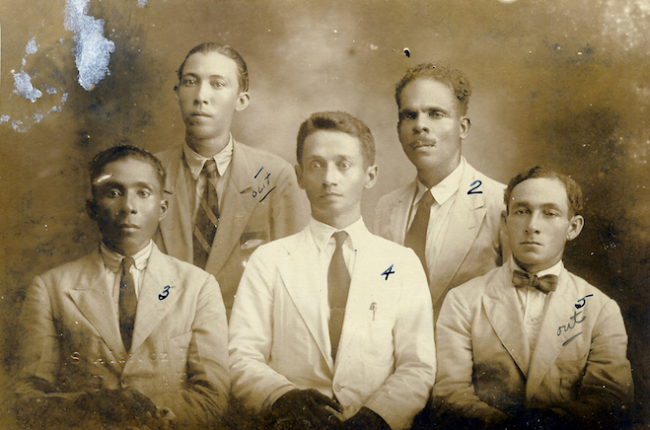
 In December 1928, the humid air of Colombia’s Caribbean coast hung heavy with tension. For weeks, thousands of banana workers had been on strike against the United Fruit Company, demanding basic labor protections — written contracts, eight-hour workdays, cash wages instead of company scrip, and recognition of their right to organize. What began as a labor dispute would end in gunfire, panic, and a legacy of silence and controversy. The event would come to be known as the Banana Massacre.
It unfolded in the town of Ciénaga, near the city of Santa Marta, in Colombia’s Magdalena Department. On the night of December 5–6, Colombian army troops opened fire on a crowd of striking workers and their families gathered in the town square. The number of dead remains disputed to this day — official government reports claimed a few dozen casualties, while witnesses and later historians suggested hundreds, possibly more than a thousand.
What is certain is that the massacre became one of the most significant and traumatic labor events in Latin American history, exposing the volatile intersection of foreign corporate power, domestic politics, and the desperate conditions of workers in the early 20th century.
The Rise of United Fruit
To understand the Banana Massacre, one must first understand the role of the United Fruit Company. Founded in 1899, United Fruit rapidly expanded throughout Central and South America, controlling vast swaths of land devoted to banana cultivation. The company built railroads, ports, and entire company towns. In many regions, it wielded influence that rivaled — and sometimes exceeded — that of local governments.
Colombia became a key site of United Fruit’s operations. By the 1920s, the banana zone near Santa Marta was one of the company’s most productive regions. Bananas were a lucrative export, and global demand was rising.
But the wealth generated by the industry did not trickle down to the laborers who harvested the fruit. Workers often lived in precarious housing, labored long hours under harsh tropical conditions, and were paid partly in company-issued vouchers redeemable only at company stores. Contracts were often informal or nonexistent. Job security was minimal.
Discontent simmered.
The Workers’ Demands
In November 1928, banana workers organized a strike. Their demands were not radical by global standards, but they were transformative for the local context. They asked for written contracts to ensure clarity and fairness. They demanded payment in Colombian pesos rather than company scrip. They sought the eight-hour workday, six-day workweeks, and compensation for workplace accidents.
These demands reflected broader labor movements emerging worldwide in the early 20th century. But in Colombia’s banana zone, they were perceived by company executives and some government officials as threats to economic stability.
The strike quickly spread. Thousands of workers and their families joined demonstrations. Production halted. Exports stalled.
Government Response
The Colombian government faced pressure from multiple directions. On one side were the striking workers and local political figures sympathetic to labor reform. On the other was United Fruit, a powerful multinational corporation with significant economic clout and close ties to U.S. officials.
There were fears — some genuine, some exaggerated — that the strike could escalate into revolutionary unrest. The Russian Revolution was still fresh in global memory, and elite circles across Latin America were wary of socialist agitation.
As tensions mounted, the Colombian government dispatched army troops to the region. Martial law was declared. Public gatherings were restricted.
Yet on the evening of December 5, thousands of strikers and their families gathered peacefully in Ciénaga’s main square, reportedly awaiting an official announcement regarding negotiations.
Instead, they were met with soldiers.
The Night of Gunfire
According to multiple accounts, the army ordered the crowd to disperse. When they did not immediately comply — perhaps believing negotiations were imminent — the troops opened fire.
Chaos erupted. People fled in all directions. Some were trampled. Others were struck by bullets. Panic spread through the surrounding streets.
Official government reports at the time claimed that 47 people were killed. However, contemporary witnesses, including U.S. diplomats, suggested the toll was far higher. Some accounts claimed that bodies were loaded onto trains and removed, possibly buried in mass graves or dumped at sea.
The exact number of casualties remains unknown. Estimates range from dozens to over a thousand.
What is beyond dispute is that the violence crushed the strike. Production resumed shortly thereafter.
Silence and Memory
For years, the Banana Massacre was downplayed in official narratives. Government records minimized the death toll. United Fruit distanced itself from the military action, framing the strike as destabilizing unrest.
But memory persisted among local communities. Stories of the night of gunfire passed from generation to generation.
The event entered global consciousness through literature. In 1967, Colombian author Gabriel García Márquez immortalized the massacre in his novel One Hundred Years of Solitude. In the book, he describes a fictionalized version of the event in which thousands of workers are killed and the massacre is later denied by authorities. Márquez’s depiction blurred the lines between history and magical realism, but it ensured that the tragedy would not be forgotten.
For many readers worldwide, the Banana Massacre became synonymous with the exploitative power of multinational corporations in Latin America.
Corporate Power and “Banana Republics”
The massacre contributed to the popularization of the term “banana republic” — a phrase used to describe countries whose economies were dominated by foreign corporations, often at the expense of political sovereignty and labor rights.
United Fruit became emblematic of this dynamic. The company’s influence extended beyond Colombia into Guatemala, Honduras, and Costa Rica, where it controlled land, transportation networks, and political alliances.
Critics argued that corporate interests often aligned with authoritarian or repressive measures to suppress labor organizing. Supporters contended that the company brought infrastructure and development.
The truth, as history often reveals, was complicated. But in Ciénaga in 1928, the power imbalance was stark.
Long-Term Impact
The Banana Massacre marked a turning point in Colombian labor history. Though the strike was crushed, the event fueled labor activism and political debate in subsequent decades.
It also deepened distrust between rural workers and national authorities. The perception that the government had sided with foreign corporate interests over its own citizens lingered.
In the broader Latin American context, the massacre became part of a pattern of labor repression tied to export-driven economies.
Over time, United Fruit rebranded — eventually becoming Chiquita Brands International — but its early history remained controversial.
Historical Debate
Historians continue to debate key details of the massacre. How many died? Who ordered the troops to fire? To what extent did U.S. diplomatic pressure influence the Colombian government’s decision?
Some scholars argue that the higher casualty estimates were inflated by political rhetoric. Others contend that official figures were deliberately minimized to avoid international condemnation.
Archival research has shed light on aspects of the event, but gaps remain. The lack of definitive records contributes to the massacre’s haunting quality.
A Tragedy Rooted in Inequality
At its core, the Banana Massacre was not simply a clash between workers and soldiers. It was the violent expression of structural inequality.
Workers demanded rights that many industrial laborers elsewhere were already beginning to secure. They sought dignity and legal protections in a system designed to maximize efficiency and profit.
The government, caught between economic dependency and social unrest, chose force over negotiation.
The result was bloodshed — and a scar that endures in Colombia’s historical consciousness.
The Echo in the Fields
Nearly a century later, the banana fields of Colombia still produce fruit for global markets. The trains run, the ships depart, and international commerce continues.
But in Ciénaga, the memory of December 1928 remains.
The Banana Massacre stands as a reminder of how economic systems can collide with human rights. It illustrates the dangers of unchecked corporate influence and the fragility of labor protections in volatile political climates.
It also underscores the power of memory. Even when official narratives attempt to minimize tragedy, stories endure.
On that December night, under the tropical sky, workers gathered with hope for change. They left with grief and silence.
History, however, has not been silent. And the echo of gunfire in the banana fields continues to reverberate — a warning, a testament, and a call to remember.