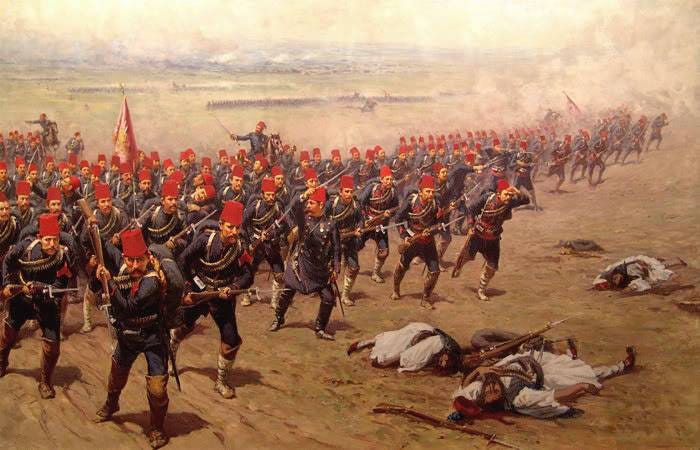
 War is often remembered through moments of calculated brilliance or devastating tragedy. But sometimes history produces something stranger—events so chaotic and improbable that they feel like satire. The Battle of Karánsebes, fought in 1788 during the Austro-Turkish War, is remembered as one of those moments. According to popular retellings, the Austrian army managed to defeat itself before the Ottoman enemy even arrived.
The story has everything: drunken cavalrymen, language barriers, friendly fire, mistaken identity, artillery fired in panic, and thousands of casualties without a meaningful enemy engagement. But as with many legends, the truth is more complicated—and perhaps even more revealing.
The War Behind the Chaos
To understand what happened at Karánsebes, we need context.
In 1787, the Habsburg Monarchy—under Emperor Joseph II—entered into war against the Ottoman Empire. Austria aligned with Russia in what became known as the Austro-Turkish War (1787–1791). The conflict was part of the broader struggle between European empires for influence in southeastern Europe.
Joseph II was an ambitious reformer but not an especially gifted military strategist. Determined to expand Austrian influence in the Balkans, he assembled a large multinational army and marched toward Ottoman territory.
By 1788, Austrian forces were maneuvering through the Banat region, near the town of Karánsebes (in present-day Romania). The army was massive—estimates range from 80,000 to 100,000 troops—but it was also deeply fragmented.
A Multinational Powder Keg
The Austrian army was not culturally unified. It included Germans, Hungarians, Croats, Serbs, Italians, Romanians, Czechs, and others. Orders were issued primarily in German, but many soldiers did not speak it fluently.
This linguistic diversity mattered.
In modern armies, communication breakdowns are dangerous. In 18th-century forces—without radios, standardized signals, or clear chains of command—miscommunication could be catastrophic.
The troops at Karánsebes were already fatigued. Supplies were inconsistent. The Ottoman army was believed to be nearby. Nerves were stretched thin.
Then came the night patrol.
The Incident Begins
According to most accounts, Austrian cavalry units were sent ahead of the main force to scout for Ottoman positions. During this patrol, they encountered not enemy troops—but a group of traveling merchants or Romani traders selling alcohol.
The cavalrymen reportedly purchased schnapps.
As night fell, the soldiers began drinking.
Sometime later, Austrian infantry units arrived in the same area. Seeing the cavalry encamped and drinking, they allegedly requested a share. The cavalry refused. Tempers flared.
An argument escalated into a physical altercation. A shot was fired—possibly into the air, possibly at someone nearby.
And that’s when panic began.
“Turks! Turks!”
In the darkness, someone reportedly shouted “Turks! Turks!” Whether it was a misunderstanding, a drunken prank, or genuine fear is unclear.
What is clear is that confusion spread rapidly.
Infantry units, hearing gunfire and shouts, assumed an Ottoman attack was underway. Without clear communication or visibility, soldiers began firing into the night.
Some officers tried to restore order by shouting commands in German—“Halt! Halt!” But many troops didn’t understand German. To Hungarian or Slavic ears, “Halt!” may have sounded like “Allah!”—further reinforcing the belief that Ottoman forces were attacking.
Panic metastasized.
Friendly Fire and Artillery Chaos
As musket fire erupted in the darkness, cavalry units attempted to retreat. Infantry mistook the movement for an advancing enemy charge. Artillery units, hearing the commotion and unable to see clearly, reportedly began firing cannons into areas where they believed Ottoman troops were massing.
The result was catastrophic friendly fire.
Units clashed with one another. Some soldiers fled across a nearby river. Others trampled comrades in the confusion. Horses bolted. Wagons overturned.
With no centralized communication system, rumors outran reality. The belief that the Ottoman army had launched a full-scale night assault spread across the camp.
The Austrian army descended into chaos—without a confirmed enemy presence.
The Aftermath
By morning, the shooting had subsided. Survivors surveyed a battlefield littered not with Ottoman casualties, but with their own.
Casualty estimates vary wildly. Some popular retellings claim thousands were killed or wounded—figures as high as 10,000 appear in certain narratives. However, modern historians are skeptical of these numbers.
Contemporary records are sparse and sometimes contradictory. It’s likely that casualties were significant but not as astronomically high as legend suggests. Still, the psychological impact was profound.
Two days later, Ottoman forces actually arrived in the area. They reportedly encountered minimal organized resistance. Whether this was directly caused by the night’s chaos or simply coincidental timing is debated.
What remains undeniable is that the Austrian army had severely compromised itself before facing the enemy.
Why Did It Happen?
Several factors converged:
1. Language Barriers
The Austrian army’s diversity, normally a sign of imperial reach, became a liability. Misheard commands fueled panic.
2. Night Operations
Nighttime combat in the 18th century was notoriously dangerous. Visibility was minimal. Identification of friend versus foe was nearly impossible.
3. Alcohol
Drinking among soldiers was common. Alcohol lowered inhibitions and heightened volatility.
4. Poor Communication Structure
Without standardized signals or coordinated command, rumors could spiral unchecked.
5. Psychological Tension
Troops believed Ottoman forces were nearby. Anxiety primed them for overreaction.
In short, Karánsebes was a perfect storm of confusion.
Legend vs. Reality
The Battle of Karánsebes has grown in the retelling. Some historians argue that the event has been exaggerated over time, possibly even mythologized in later accounts.
Primary documentation from the immediate aftermath is limited. Much of the detailed narrative comes from later sources. That doesn’t mean it didn’t happen—but it does mean that the dramatic flourishes (thousands dead, massive artillery barrages, total collapse) may be embellished.
Still, even stripped of exaggeration, the core truth remains: significant friendly fire and panic occurred in the Austrian camp before Ottoman engagement.
The phrase “army defeated itself” is shorthand for a breakdown in command and control.
A Broader Military Lesson
Karánsebes is often cited in military history as an example of “fratricide” and command failure.
Modern armies invest heavily in communication systems precisely to avoid such disasters. Clear identification protocols, standardized language training, and disciplined engagement rules exist because chaos is always a possibility.
The Austrian army of 1788 lacked these safeguards.
Interestingly, multinational coalitions today—like NATO forces—operate with strict linguistic and procedural standardization for this reason. Karánsebes is a cautionary tale about diversity without cohesion.
Joseph II’s War
The broader Austro-Turkish War did not go especially well for Austria. Though some victories were achieved later, the campaign was plagued by disease, supply issues, and organizational weaknesses.
Joseph II himself fell ill during the war and died in 1790. The conflict ended in 1791 with limited territorial gains for Austria.
Karánsebes, whether as literal disaster or symbolic embarrassment, became part of the narrative of mismanagement.
The Psychology of Panic
One of the most compelling aspects of the Battle of Karánsebes is psychological.
How does an entire army panic into attacking itself?
Fear spreads faster than facts. In darkness, perception replaces verification. Once a few shots are fired, confirmation bias takes over—every sound becomes enemy movement.
Group panic is contagious. Soldiers see comrades running and assume danger is real. In a tightly packed encampment, small disturbances escalate rapidly.
Modern studies of crowd psychology confirm this dynamic. Karánsebes may be an early, large-scale example.
The Absurdity of War
There is something darkly ironic about the story.
Empires mobilized tens of thousands of men for territorial ambition. Generals plotted maneuvers. Supply chains were organized. And then—through a combination of schnapps, misunderstanding, and shouted words in the dark—the army imploded before battle began.
War is often framed as strategic chess.
Karánsebes reminds us it is also human—fallible, emotional, prone to chaos.
A Story That Endures
The Battle of Karánsebes persists in popular imagination because it feels almost unbelievable. It has become shorthand for catastrophic self-sabotage.
Yet beneath the absurdity lies a sober lesson about communication, leadership, and the fragility of order under stress.
Even if later historians have embellished the casualty numbers, the central episode captures a truth: armies are not machines. They are collections of anxious, exhausted individuals navigating uncertainty.
In 1788, on a dark night near Karánsebes, that uncertainty spiraled out of control.
Final Reflection
Did the Austrian army truly “defeat itself”?
Not in the sense of annihilation. The war continued. The empire endured.
But for one night, confusion proved more dangerous than the enemy.
The Battle of Karánsebes stands as one of history’s strangest military disasters—a cautionary tale wrapped in dark comedy. It reminds us that sometimes the greatest threat in war isn’t across the battlefield.
Sometimes, it’s already in the camp.