 In 1731, somewhere in the warm waters of the Caribbean, a British merchant captain stood helpless on the deck of his ship as Spanish coast guards boarded and searched his cargo.
The captain’s name was Robert Jenkins.
The encounter was not unusual. The seas were tense, crowded with smugglers and imperial patrols. Spain and Britain were rivals in the New World, circling each other warily but not yet at open war.
What happened next would echo across nearly a decade.
According to Jenkins’ later testimony, a Spanish officer sliced off his ear, handed it back to him, and told him to take it to his king with a warning.
Whether those words were actually spoken is uncertain.
But eight years later, that severed ear would be brandished before the British Parliament — and Britain would declare war.
This was The War of Jenkins’ Ear, a conflict with a name so absurd it feels fictional — and yet it was deadly, sprawling, and geopolitically consequential.
Empires in Friction
To understand how an ear could lead to war, you must understand the world of 18th-century empire.
Spain had dominated the Americas for centuries. Its treasure fleets carried silver and gold from the New World back to Europe. Britain, rising in naval power, was eager to break Spain’s monopoly.
The two nations had already fought multiple wars.
After the War of the Spanish Succession (1701–1714), Britain gained limited trading rights in Spanish America — including the lucrative asiento, a contract allowing British merchants to sell enslaved Africans to Spanish colonies.
But those rights came with strict conditions.
Spain suspected — often correctly — that British traders were smuggling goods into Spanish territories beyond what treaties allowed.
Spain responded with coast guard patrols, known as guardacostas, empowered to board and search British ships suspected of smuggling.
Britain called it harassment.
Spain called it enforcement.
The Caribbean simmered.
The Incident of 1731
In April 1731, Robert Jenkins’ brig, the Rebecca, was intercepted near Cuba by Spanish authorities.
The Spanish boarded, searched, and accused him of illegal trade.
According to Jenkins’ account, the encounter escalated violently.
He later testified that a Spanish officer cut off his ear and told him:
“Go and tell your king that I will do the same if he dares to do the same.”
Some accounts suggest the mutilation may have occurred during a scuffle rather than as formal punishment.
The details are murky.
But Jenkins kept the ear — reportedly preserved in a jar.
And he waited.
Eight Years of Silence
What makes the story stranger is the delay.
Jenkins did not immediately become a cause célèbre.
For years, the incident remained a minor grievance in a long list of maritime disputes.
Britain and Spain continued tense negotiations.
But in Britain, political factions were eager for confrontation.
Merchants complained of Spanish interference.
Naval officers wanted action.
Public sentiment leaned toward national pride.
The ear waited for its moment.
Parliament and the Jar
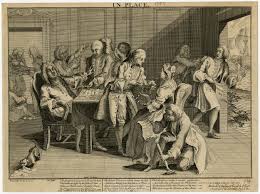
In 1738, as diplomatic tensions escalated, Jenkins was called to testify before the British House of Commons.
Legend holds that he presented the severed ear as evidence.
Some historians question whether the ear was physically displayed, but contemporary accounts insist that it was.
Whether jarred or symbolic, the ear became a rallying cry.
Newspapers sensationalized the story.
Politicians invoked national honor.
Public outrage surged.
The idea that a British subject had been mutilated by Spanish forces ignited fury.
In October 1739, Britain declared war.
The official cause?
Spanish depredations against British shipping.
But in the public imagination, it was simpler:
Spain had cut off a British ear.
Britain would answer with cannons.
A War Begins
The War of Jenkins’ Ear officially began in October 1739.
Britain’s initial objective was straightforward:
Break Spanish dominance in the Caribbean.
British naval forces attacked Spanish ports in the Americas.
Early successes fueled optimism.
Admiral Edward Vernon captured the Spanish port of Porto Bello in present-day Panama with relative ease.
Britain celebrated wildly.
Commemorative medals were struck.
Songs were written.
Streets were named “Portobello Road.”
Victory seemed inevitable.
The Disaster at Cartagena
Confidence led to overreach.
In 1741, Britain launched a massive assault on Cartagena de Indias (in modern Colombia), one of Spain’s strongest Caribbean fortresses.
The expedition was enormous:
-
Nearly 200 ships
-
Around 27,000 men
-
The largest amphibious assault of the 18th century
Opposing them was Spanish Admiral Blas de Lezo — a one-eyed, one-legged, one-armed commander known as “Half Man” but formidable in defense.
The British expected swift victory.
Instead, they encountered:
-
Thick fortifications
-
Tropical disease
-
Stifling heat
-
Coordinated Spanish resistance
Yellow fever and dysentery ravaged British troops.
The siege collapsed.
Of the 27,000 men, thousands died — not from battle, but from illness.
It was one of Britain’s worst colonial military disasters.
And it began, in the popular telling, with an ear.
The War Expands
The War of Jenkins’ Ear did not remain confined to the Caribbean.
In 1740, Europe erupted into the War of the Austrian Succession.
The conflict between Britain and Spain merged into a broader continental war involving France, Austria, and Prussia.
The ear that sparked outrage became subsumed within a far larger geopolitical struggle.
The war dragged on until 1748.
By then, the original grievance seemed almost quaint.
The Human Cost
The absurd name masks a grim reality.
The war cost tens of thousands of lives.
British forces suffered catastrophic losses in tropical campaigns.
Spanish colonies endured bombardment and siege.
Enslaved populations in the Caribbean experienced upheaval as imperial forces battled.
What began as a maritime dispute became a full-scale imperial war.
Was the Ear the Real Cause?
Historians are clear on one point:
The ear was not the true cause.
It was the pretext.
Underlying tensions included:
-
Trade restrictions
-
Smuggling disputes
-
Colonial competition
-
Naval rivalry
-
National pride
The mutilation of Jenkins was symbolically powerful — but it was fuel added to an already burning fire.
The war was likely coming regardless.
The ear simply made it easier to justify.
Propaganda and Patriotism
The story of Jenkins’ ear was a masterstroke of political storytelling.
It personalized a geopolitical conflict.
Instead of abstract trade disputes, the public saw a maimed sailor.
Outrage is easier to mobilize around a face than a treaty.
Cartoons depicted Spanish cruelty.
Pamphlets denounced national humiliation.
The ear became a metaphor for wounded British honor.
Jenkins Himself
What became of Robert Jenkins?
He reportedly returned to sea service.
He later became a privateer captain and even commanded a ship in the war that bore his name.
Ironically, he survived the conflict that his mutilation helped inspire.
He died in relative obscurity.
The war outlived him in memory.
The Power of Symbolic Injury
The War of Jenkins’ Ear reveals a recurring historical pattern:
Small, vivid incidents can galvanize public opinion far beyond their objective scale.
A mutilated ear.
A sunken ship.
An insulted flag.
Such moments crystallize diffuse tensions into moral clarity.
Whether justified or manipulated, they provide narrative.
And narrative moves nations.
A War Remembered for Its Name
Few wars are remembered for their causes.
Fewer still are remembered for body parts.
The War of Jenkins’ Ear stands out precisely because its name is so peculiar.
It invites laughter.
But behind the absurdity lies a sobering truth about imperial ambition and political storytelling.
Final Reflections: The Ear That Echoed
The War of Jenkins’ Ear was not really about an ear.
It was about empire.
Trade.
Power.
Pride.
But the ear gave those forces a human face.
It turned maritime disputes into moral outrage.
It transformed diplomacy into war.
And it reminds us that history often hinges not just on events — but on how those events are told.
An ear was cut off in the Caribbean.
Eight years later, cannons roared.
Sometimes, history listens not to reason — but to the loudest story in the room.